Wicked: For... Good?

I wasn’t going to write anything until I made my way to see Wicked: For Good again, but there is just… too much weighing on my mind right now. I had to get everything out in the open, or else it would just drive me crazy.
Before we begin, I can’t really discuss this film without acknowledging the conversations online. I wish I could! But it’d be disingenuous. Any time Wicked is brought up, regardless of the context, things… devolve. We lose the plot. This was always true, but now it seems especially unavoidable. Even if you are chronically offline, you may be aware of the normalization towards literally everybody having an opinion on the bodies of the women in this film. Discourse about how Ariana and Cynthia (at times Michelle, as well) appear currently. Blatant misogynoir towards Cynthia, only worsened after the incident where Ariana got literally jumped by a “fan” and Cynthia rushed to her defense. Ableism towards Marissa Bode.
None of this is new, of course. Last year, the microaggressions towards Cynthia, as well as the narratives surrounding the body image of the two leads, were already major issues on the internet. Marissa Bode had to upload a TikTok asking people to stop being ableist… please!!! It seems to just be getting worse, though, and I’m here to say… I think you all have to just leave these women alone. People keep posting these memes about Cynthia, and I’m here to tell you… they are all racist. People who claim to just “care” when they point out how Ariana and Cynthia look right now, you could be the most well-meaning person alive, and you still don’t know either of these women. You may think you’re doing a public service, but you are not in community with Ariana Grande, so the public nitpicking of her body isn’t actually doing any good. You are just weird and hyper-fixated on degrading women. Unpack that. The language you are using in discussing Ariana and Cynthia isn’t even thoughtful, most of the discussions feel as though there’s a deep-rooted desire to humiliate them. Ableism goes without saying, if you ever engaged in derogatory rhetoric towards Marissa Bode, you are disgusting. I just have a very low tolerance for all of this nonsense. Okay, it has been addressed, let’s move on to the film itself.
I’m not going to be contextualizing very much, so this isn’t an issue to read with no knowledge of either Wicked film or the stage production. You’re about to be getting spoiled but with no context of anything. Just my thoughts thrown at you.
GLINDA (thee Good) UPLAND.
I wanted to discuss Glinda first, because it’s my personal observation that this film adds a lot to her arc, especially. It has been over a decade since I saw the stage production, and there’s no doubt that they added plenty for Elphaba’s storyline as well, but Glinda got the most notable additions, this film put great emphasis on the arc of Glinda.
Both Elphaba and Glinda got original songs this time around, and while I don’t view either as particularly necessary to the narrative, I found the Glinda song to fail to add any depth whatsoever. It just emphasizes everything we could have already picked up on in her arc; it almost dumbs down the script. She also got a backstory that I found equally unnecessary. I see why they made both additions. Elphaba got additional backstory in Wicked part one, Elphaba got a new song in this film, they wanted to be equitable… that’s just misguided, though. For starters, they could’ve chopped the original songs altogether, or they should have drastically changed the context of them, because they really stick out in a jarring way. A key difference also being the Elphaba backstory actually adds to the arc of Elphie, whereas the Glinda backstory is just… telling us things we already know. They don’t hit the same.
On the other hand, adding her to Wonderful was a GREAT addition. A change that actually adds depth to both the scene and the bond between Glinda and Elphaba. The final twenty minutes were very Glinda focused, and I do actually love how it ends! However, if you’re going to keep the arc of Act Two Glinda focused, she should have put in more work to justify the conclusion of her arc. Having Elphaba pass the Grimmerie onto her and having her learn how to read it would’ve been more powerful if she had taken a stand before the very ending of the narrative. I do love having her get on the horse and ride over to Elphaba, and of course there always had to be the conflict of interests for the story to work, but I do think more action could have been taken for Glinda to actually showcase she is worthy of taking Elphaba’s mantle. As it stands, I don’t remember the exact context of the stage production, I know the story beats remain the same, but I do believe they’ve added nuance and emphasis to the Glinda arc that makes it more appreciated… though imperfect. Ariana Grande-Butera’s performance really shines, though. She was incredible in part one, but I think her complexities and clear conflict of interest is beautifully portrayed through every choice Ariana made. The care she put into the essence of Glinda is fully conveyed.
ELPHABA (sex cardigan) THROPP.
Though I suspect they put more emphasis on Glinda’s arc in this film, Cynthia Erivo’s performance is as powerful as ever here. As Long as You’re Mine and No Good Deed are delivered at the peak in which I’ve ever heard them performed before, thanks to her. Also, it seems insulting to imply this was “The Glinda Movie,” Elphaba has plenty to do in this. I’m sure she has the most screentime, I think what I’m catching is how they’re really pushing it by calling Ariana Grande the “supporting” actress of the film. She is a co-lead, no doubt. Supporting roles are the likes of Madame Morrible or Boq. Glinda is a total throughline of this story, more so than she was in Part One.
I do think Elphaba’s writing could’ve been strengthened. I was talking to my friend Siyyan about this, but one thing I feel as though could’ve helped the Elphaba arc is having her get one moment where she addresses the people of Oz directly. Every attempt beforehand got squashed. Whether it be the sky portraits that got twisted by Morrible, or the gay lion ruining her power ballad. In my opinion, No Place Like Home should have been moved to a scene where she formally tries to address a group of Ozians, and they make the active choice not to listen to/believe her. They buy into the propaganda. It would also make the Wonderful number serve more of a narrative purpose of foreshadowing. The wizard was right. Perhaps it’s not entirely necessary, but it’d make No Place Like Home fit better, in my opinion. Change some lyrics. It would be a bit derivative of No Good Deed still, admittedly, but I do still think having one scene where Elphaba tries to get through to the people and they just don’t care to hear her out would serve to make the propaganda theme even more impactful. As it stands, her arc is more about her leaning into the role of Wicked, which was narratively inevitable, but I think there could’ve been more done to enrichen it in the same way I think a lot of the additional choices in this film were trying to enrichen Glinda’s. Perhaps a rewatch would change my tune, though, because I do love what Cynthia was doing here.
NESSAROSE THROPP… the diva with the house drop.
In my opinion, a top priority for the Wicked films should have been working Nessa’s arc out a bit better. I may be the only person who thinks like this. I understand she was never going to share a co-leading role with Glinda and Elphaba… but she’s barely even a supporting character in either film despite simultaneously holding such an integral role and having a very jarring, intense arc. She starts Act One as this young woman who wants to just exist for herself for once and starts Act Two as a wicked dictator. I do think appreciated changes were made. For instance, I’m not an authority on any type of wheelchair user representation, but having her fly instead of walk is a very admirable moment of progress. Her aspiration was never once “to walk,” rather than feel the magic she once felt at the Ozdust Ballroom. The musical has very dated rhetoric when it comes to Nessa’s disability. The chair is essentially spoken about as if it’s some curse for her. On stage, the stage production rendition of Wicked Witch of the East, includes Nessa calling her chair hideous, talking about how pitiful her existence is, how tired she is of relying on Elphaba for everything. She wants Elphaba to use her powers to “rescue” her from her life confined to her chair. An inherently dated trope that the film actively subverts at every turn. In over 20 years, Marissa Bode is the first wheelchair user to play Nessarose. When you consider the media you’ve consumed, consider how often the disabled character you’re watching is played by a disabled actor. Unless you actively seek out such representation, I’m willing to bet that you won’t be able to name that many examples. To this day, that type of representation very rarely exists. Thanks to the work and advocacy from someone such as Marissa Bode, hopefully things will become better.
The empathy Marissa Bode carries into the role shines through. Yes, she’s still the Wicked Witch of the East, but deep down, you feel as though the character is consistent thanks to the nuances she adds to the delivery. On stage, to my recollection, her turn towards the wicked feels… one dimensionally surface level. I feel as though the performance makes her intentions cleared up more. The arrested development that came from her father’s over-protection created a trap where the rejection she feels by the people in her closest circle causes her to act impulsively and carelessly. That isn’t a justification, she is still the Wicked Witch, but the performance is important to the connection to the text. When Elphaba and Glinda grieve her, you understand why. It rings true. I do think the script could have done more with her arc. I wish they explored her being able to read the Grimmerie more, that’s soooo interesting to me. She is one of the Witches of Oz, after all.
Madame Morrible… flip it around… you get WICKED WITCH.
As I said in my last newsletter, I greatly prefer the more subdued, intimidating aura film Morrible has over the campy stage production. That seems especially important in this film where Morrible is doing horrifying things to people. She murders Elphaba’s sister!!! You have to feel a chilling aura coming from her for it to be effective. A campy villain performance works better on a stage, where the nuances aren’t as in your face. On screen, it’d feel especially jarring. Plus, Jeff Goldblum is already doing soooo much, we didn’t need a campy Morrible, in my honest opinion. That isn’t to say Michelle Yeoh’s performance is perfect in this film. For starters, I question the editing choices made in this film overall. I don’t think every take they used is the best acting take they could have chosen. I won’t elaborate upon that, because I do not have access to every bit of Wicked footage… I have just watched sooo much behind the scenes footage, so many trailers, featurettes, you can’t help but start forming favorite takes that aren’t always necessarily the final takes used in the film. I also didn’t mind her in The Wizard and I because her speak-singing actually made sense in the context of the film and soundtrack… this time, her two singing lines are much more animated, and it sticks out more that she isn’t a singer. Jon M. Chu should’ve just changed the lines into dialogue.
FIYERCROW.
I expressed neutrality in my last newsletter, and honestly… I’ve only grown more neutral throughout this film. For starters, Jonathan Bailey’s performance is much more limited in this film. He has less room to use his charisma in this arc, which is what made his presence so effective in part one. I still don’t love his transformation into the Scarecrow… speaking of, I can’t stand how they edited the No Good Deed sequence. I appreciate Fiyero’s role and how he is willing to fight for Elphaba, in the end essentially sacrificing his life for her honor. It’s meaningful, but when you have to connect his story into the framework of The Wizard of Oz, it doesn’t always… work.
BOQ.
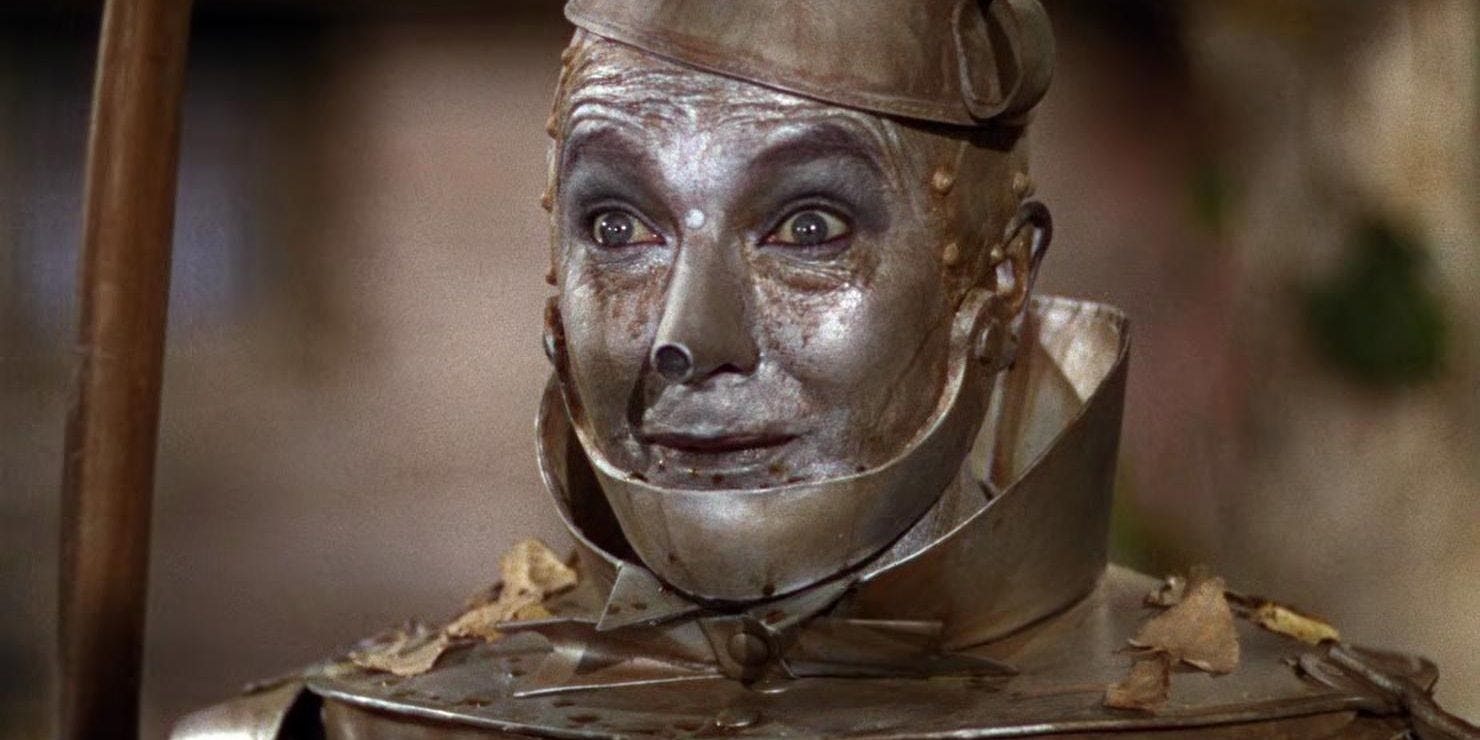
(Pictured Above: Public Enemy #1. Source: ScreenRant/Metro-Goldwyn-Mayer)
Still the devil, but his narrative role as the Tin Man works way better than Fiyero’s role as The Scarecrow. His transformation arc is more compelling, his role once he turns into the Tin Man makes actual sense. Also, the styling done to Ethan Slater’s face is more successfully done than what they did with Fiyercrow.
THE WIZARD.
I don’t care for Jeff Goldblum’s performance, honestly. I hate the digitally de-aged Jeff Goldblum in the father reveal. I do love the Wonderful musical number, but that’s carried by Ariana Grande and Cynthia Erivo’s role in it. I also love the lines in the song about how history lies and people just believe the narratives that survive while ignoring the people they can’t fit into a box. It sort of serves to be the thesis of the film, which is all about historical, political propaganda. That has nothing to do with Jeff Goldblum, though, he didn’t write this.
When all is said and done, I do have love for this film. It’s imperfect. It’s a mess. It makes some changes that I love, makes other changes I don’t appreciate. It’s still a story I have nostalgia for, though, and in the end… it made me feel things, and features some of my favorite songs from the musical. They aren’t always well directed or edited musical numbers… but when Ariana and Cynthia are singing, I can’t help but be happy that I’m hearing these songs brought back to life again.
It’s such a mess but also so compelling.
I think that if they let us spend any kind of real time with the charmed circle For Good would’ve been able to hit in ways it couldn’t in this moment